Home Blog Page 322

COVID-19 Turns Iran into Red Status: Health Official

0
In an interview with Shahrvand daily, Minoo Mohraz, member of the National Covid-19 Task Force, shed light on Iran's dire health condition
In an interview with Shahrvand daily, Minoo Mohraz, member of the National Covid-19 Task Force, shed light on Iran’s dire health condition

By Jubin Katiraie

Iran’s state-run daily Shahrvand interviewed Dr. Minoo Mohrez, a member of the National Anti-Coronavirus Headquarters. Her remarks showed the extra-severe situation in Iran, in the sense of the coronavirus epidemy. Below are parts of this interview:

On this pretext, we have a conversation with Dr. Minoo Mohrez, an infectious disease specialist and a member of the scientific committee of the National Anti-Coronavirus Headquarters. Someone who believes that part of the current problems is due to the inattention of policymakers to the opinions of experts of the Scientific Committee of the National Anti-Coronavirus Headquarters. She speaks candidly about these challenges and believes that people need to take extra care of themselves, as the cost of a day hospitalization for a patient with coronavirus infection is much higher than the figures quoted by some media outlets. Someone who says she has not seen so many deaths during her 45 years of professional work.

Q: Why, despite the warnings of you and other experts about the third wave, and given that you have repeatedly warned of the danger, strictness was not done as it should be?

A: A big problem all over the world is that people still do not think COVID-19 is real. At first, they were scared, but then it became normal for them. Quarantine was practiced in many countries from the beginning, but its social, psychological, and economic effects were far worse than those of COVID-19, because in these conditions’ unemployment, poverty, and anxiety pile up.

Tsunami of Poverty and Misery in Iran Caused by Sanctions or Officials’ Looting?

Q: You mean, you know the people responsible?

A: People look at their rulers; Naturally, when telecommuting is abolished and schools and universities are reopened, it has consequences and makes people think that the situation is commensurate.

Q: How effective have the recent reopening and cancellation of telecommuting been?

A: During this period, wrong decisions were made in many countries, as well as in our country. The reopening of schools on September 5 was a mistake. Schools were also closed during the Iraq-Iran war. The children studied on the radio and television all the time. The same thing can be done now, my children studied in the same way at that time. Now the number of visitors has increased from March and April. In one major hospital, 60 people were hospitalized in one day. See how bad they were when they were hospitalized because we treat many people on an outpatient basis. I call on the people not to gather, even if they (the government) have a plan for them, not to participate in it and to protest. My residency was when diphtheria and tetanus were rampant but were not so deadly.

Q: You mentioned the dead and the sick above. Sometimes there are rumors that the statistics announced by the Ministry of Health every day are not true. what is your opinion?

A: The World Health Organization will accept your statistics when you have a positive PC. False positives are rare, but we have a false negative of 30 percent to 40 percent in tests, so 30 percent to 40 percent of our patients are not reported. Doctors should tell patients that if someone’s test is negative and they still have symptoms, it means that they have the coronavirus.

Q: Given the fact that the hospitals are full, what are the consequences of this situation?

A: The designated hospitals for the coronavirus are currently full. Even in the corridors of the hospital and on the couches of the hall, some patients have been given oxygen. Our doctors and staff are tired. We are used to working hard physically, but we are really stressed. The epidemic of no disease has never been so severe. They show that they are disinfecting school classrooms with pumps, but that is not enough. The virus is not transmitted through doors and walls. Most parts of Iran were red when education decided to reopen schools. They said the color of the areas does not matter! But is it important, now after this incident, all of Iran turned has red?

Why Iran Reopens Schools Despite the Coronavirus Risk?

Q: Given that the incidence of familial infections has been reported to be higher than before, if a person in a family has symptoms, does the whole family need to have a PCR test?

A: Due to the high cost and limited nature of PCR testing, I do not recommend doing this as usual. In other parts of the world, where there are more possibilities, as soon as a person becomes ill, all those who have been in contact with him are tested, and if their test is positive, they are quarantined. But currently, such a possibility does not exist in Iran. The PCR test is expensive and costs about 7 to 8 million rials [$28-32]per test.

Given the quasi-explosive situation in Tehran, which accounts for two-thirds of the victims and about 60 percent of the infected, why not consider a special program for the capital?

A: I am a scientific member of the National Anti-Coronavirus Headquarters and I am not a decision-maker there. The Scientific Committee opposes any kind of gathering in these super-red conditions. Our views are reflected; however, the final decision is not our responsibility.

Q: That is, the decision-makers in the headquarters are indifferent to your opinions and those of other members of the scientific committee? Because what we hear from you is completely different from what we see in action.

A: Feedback from our talks will be provided by the Minister of Health at the Anti-Coronavirus Headquarters. As a rule, the opinions of the Ministry of Health and the scientific ommittees should be considered before making a decision. Finally, I do not know what happens when making a decision! I know that the Minister of Health is also worried about this situation and the advisers to the Minister also say that they cannot do anything more. Yes, it seems that decisions are made elsewhere. Health officials who specialize in this field express their views. But policymakers’ positions are different. Policymakers should take the recommendations of the Ministry of Health seriously because the science of treating infectious diseases is in this area, not in other ministries.

Iran Nurses Pay Delay

Harsh Treatment of Iranian Political Prisoners

0
Iranian authorities apply more pressure on political prisoners and issue harsh sentences to silence any opposition voice

By Pooya Stone

An Iranian prisoner of conscience began a hunger strike yesterday in protest to being moved to a psychiatric hospital and injected with a substance against his will.

Behnam Mahjoubi, 33, a member of the Gonabadi Dervish religious minority was transferred to Aminabad Mental Hospital on Sunday, not given any information about his supposed treatment and his family was not told where he was.

An informed source said that Evin Prison officials told his relatives that he was taken to the hospital for treatment, but his family later found out that he was illegally taken to a place for psychiatric patients. They said that after Mahjoubi found out that a judge ordered his transfer, he went on a hunger strike.

Mahjoubi is one of the 300 Dervishes arrested for taking part in protests in February 2018 in Tehran. He was released, but in August 2019, Branch 26 of Tehran’s Revolutionary Court sentenced him to two years in prison for “assembly and colluding against national security by communicating with others and providing illegal gathering”. As usual, a bogus charge to intimidate dissidents.

Mahjoubi began serving his sentence in June 2020, but prison authorities stopped him from accessing the necessary medication that his family brought in for him. The prison doctor actually told him to take sleeping pills instead. As a result, Mahjoubi had a seizure on Saturday, fell, and is now paralyzed down one side of his body.

His wife, Saleheh Hosseini, wrote in an open letter: “My husband was transferred to Aminabad Hospital while he was paralyzed due to stopping his medication. Why? Why didn’t you give him his medicine? We prepared his medicines ourselves every month, while it was your duty to prepare and deliver his medicine.”

The regime routinely used denial of medical treatment in order to put pressure on prisoners of conscience, in direct violation of international and Iranian law.

In related news, Tehran University student Mostafa Hashemizadeh was summoned to Evin Court on Friday to start serving his six-year prison sentence for protesting the regime’s intentional downing of a Ukrainian airliner in January.

The civil engineering student was sentenced to 5 years in prison for “assembly and collusion to disrupt national security” and an additional year in prison for “disrupting public order”. He has also been sentenced to three months of forced labor, 74 lashes, and a two-year ban on entering the university dormitory.

Hashemizadeh was forced to make false confessions after an interrogator threatened to kill him at least twice.

Iran Protester Father Dies from Suicide Over Son’s Imminent Execution

0
Iranian authorities' psychological and mental pressures on the father of death-row political prisoner Amir Hossein Moradi pushed him to commit suicide
Iranian authorities’ psychological and mental pressures on the father of death-row political prisoner Amir Hossein Moradi pushed him to commit suicide

By Jubin Katiraie

The father of a jailed Iranian political prisoner on death row has died from suicide, according to state-run News Agency ROKNA.

Mohammad Moradi, 60, the father of protester Amir Hossein Moradi, died at home on Monday morning, having been under severe pressure following the confirmation of his son’s death sentence, something confirmed by his son’s lawyer Babak Paknia. His wife said that he talked constantly about his son, showing extreme concern.

Following Moradi’s death, the so-called“reformist” Telegram channel Emteded said that security forces and people with cameras descended on the house and stayed “for a few hours”, while “reformist” journalist, Mehdi Mahmoudian said they were trying to extract “forced confessions” from the family.

Amir Hossein, 26, was arrested for taking part in the November 2019 protests over the authorities’ decision to triple gas prices overnight and was sentenced to death, alongside fellow protesters Saeed Tamjidi and Mohammad Rajabi. Reports indicate that he was tortured after being arrested; namely beaten, subjected to electric shocks, and forced to endure an agent standing on his chest. He was told that his torture and solitary confinement would continue until he confessed.

Iran Issues More Execution Sentences

The trio’s death sentences were confirmed in June, but Iranian launched a social medical campaign that resulted in the sentences being reviewed after the hashtag Do Not Execute was used over 10 million times, including by the President of the United States. Despite this Amir Hossein’s family were put under “mental pressure” and kept in limbo about the death sentence, which indicates that the review was never really going to result in their lives being spared. As the government usually does, they intended to delay the execution until the heat had passed, but they never wanted to stop the execution altogether.

An informed source said that following his father’s death, Amir Hossein’s mother and brother were summoned to the Intelligence Agency and threatened with arrest if they spoke to the press.

The source said: “Since Amir Hossein’s arrest and death sentence, his parents have been in poor mental health. His father was under severe mental pressure.”

At least nine Iranian protesters are on death row, but the true number may be much higher due to the state’s secrecy around things that make them look bad.

In August, Iranian authorities hanged protester Mostafa Salehi, a father of two from Isfahan, central Iran, and in early September they hanged protesters and wrestling champion Navid Afkari from Shiraz, southwestern Iran.

Tehran Efforts to Defend Navid Afkari’s Execution in a Ridiculous Manner

Tsunami of Poverty and Misery in Iran Caused by Sanctions or Officials’ Looting?

The Iranian people face a tsunami of poverty, but the leaders' concern is how to fill their pockets
The Iranian people face a tsunami of poverty, but the leaders’ concern is how to fill their pockets

By Jubin Katiraie

Iran’s supreme leader Ali Khamenei and President Hassan Rouhani claimed that the Iranian people’s bad livelihood situation is because of U.S. and global sanctions. On 12 September Rouhani cried out that world powers are not allowing them to buy medicine with their own money and tried to connect all the country’s problems to the sanctions.

His remarks were by and largely untrue since U.S. officials have on many occasions announced that there are no sanctions imposed on the import and purchase of medicine, food, medical equipment, and facilities and of course agriculture products, but Iranian officials struggle to show something else.

The truth is that the people’s livelihood problems and high costs are rooted in corruption, theft, and embezzlement by the government officials, Iran watchers argue.

To contour a real picture, we will show here some of the examples of these thefts and embezzlements.

In April 2020, it was revealed that $4.8 billion of government currency had been lost. (State-run Mashregh website, 15 April)

Aftab-e-Yazd daily wrote that $18 billion was wasted last year. This Rouhani-affiliated daily wrote that the currency was given to those who did not import goods at all, and if they did, they sold them in the open market, considering the price of the dollar in the open market. (Aftab Yazd, 11 November 2019)

Abdolnaser Hemmati, the governor of the Central Bank, admitted that in the last two years, $27 billion in foreign exchange has been given to exporters and in return, no good and currency has entered the country. According to him, these people must be held accountable. (Tabnak website, 14 July 2020)

Regarding the $27 billion figure mentioned by Hemmati, Hariri, the head of trade between Iran and China, explained that small businesses export $8-9 billion annually and that 50 percent of non-oil exports are gas and petrochemical condensates, which are in the hands of state-owned companies. (Kayhan, 20 July)

The family of Mohammad Reza Nematzadeh, former Minister of Industry, has embezzled €6.6 billion from petrochemicals. (Khabar online website, 21 July)

Iranian Vice President Eshagh Jahangiri, Rouhani’s chief deputy, acknowledged that $22 billion in foreign exchange was taken to Dubai and Istanbul to reduce the price of the currency, but the fate of the money is unclear. (Aftab website, 23 October 2019)

According to Karimi Qodusi, a member of Iran’s parliament, more than $36 billion was given to smuggling bands of goods, currency, and drugs by the order of Rouhani. (Mehr news agency, 4 October 2020)

Smuggling Gang Received $36Bn & 80 Tons of Gold by Presidential Order: Iranian MP

Mohammad Javad Zarif, Iran’s foreign minister, said that we had to give $35 billion to those which are not clear how they squandered the money and where they took it. (Shargh daily, 2 May 2020)

In 2018, the ILNA news agency reported that $30 billion had been lost in the banking network in the past 10 months. (ILNA, 29 November 2018)

In an unprecedented move, who has decided to allocate $20 billion of the country’s foreign exchange resources to various groups, some of which even do not exist, the state-run news agency IRNA wrote on 2 August 2018.

Yousefian Mollah, a former member of parliament, said it was unclear what had happened to the $9 billion and where it had gone. (Bahar website, 15 April 2020)

Saeed Leylaz, a government economist, also said that the unaccounted distribution of the 4,200 tomans currency, by wasting currency and gold resources, led to the loss of $30 billion and 80 tons of gold. (90 Eghtesadi website, 26 August 2020)

If we consider gold at the current price of $1945 an ounce, this amount of gold is equal to $5.5 billion, and in fact, it is $35.5 billion in sum, which the state has squandered in this way.

Iran: Workers Continue to Hold Strikes and Protests in Cities Across the Country

Leaving aside embezzlement by officials’ children, Omid Assadbaygi the managing director of the Haft Tapeh sugarcane factory, embezzled 2.5 trillion tomans, and Abas Irvani, economically active in the automotive industry and its affiliated group named Ozam, embezzled nearly 764 million tomans.

Ali Abedzadeh, the former head of the airline, bought the King Air 2000 for $2.5 million, but invoiced $11 million and stole $8.5 million for the aircrafts.

Theft and embezzlement are taking place in a way that it is very difficult to calculate the numbers. The figures revealed by the media or admitted by both members of the factions have something in common. The common denominator is that the leaders of the government and their affiliates are looting every moment.

From the above figures, it can be concluded that at least $50-60 billion has been looted in the last two or three years. With this amount, each Iranian receives at least 20 million Tomans, with the same amount of money, the meat consumed for seven years in Iran can be provided. With this money, 18 years of wheat consumption in Iran can be provided and two million sustainable jobs can be created by international standards.

With this money, more than two million standard hospital beds, five million standard classrooms can be built, and this money is equivalent to the national budget with a population of 30 to 40 million people.

60 Million Iranians Below the Poverty Line

Tehran Aims to Subvert Regional States

0
Iran-backed terror squads attempt to subvert regional states to create chaos and instability across the Middle East

By Pooya Stone

In a statement on September 28, the Saudi State Security announced that it managed to disband a terrorist cell linked to Iran’s Islamic Revolutionary Guard Corps (IRGC). According to the statement, security forces arrested ten individuals who had received training by the IRGC in Iran.

Saudi authorities have also discovered large quantities of weapons and explosives hidden in a house and on a farm. Security forces seized “electrical components used in the making of explosives such as capacitors, transformers and resistors, gunpowder, chemicals, Kalashnikov rifles, guns, sniper rifle, live ammunition, machine guns, blades, military clothes, and wireless communication devices,” reported al-Arabiya.

Previously, Bahraini authorities declared that they managed to foil a terrorist attack backed by the ayatollahs in early 2020. On September 20, the Ministry of Interior Kingdom stated the IRGC was behind the attack. According to the ministry’s investigations, a new group called the “Qassem Soleimani Brigade” had planned to attack several public and security structures in Bahrain.

Who Was Qasem Soleimani, the Head of Iran’s IRGC Qods Force Terror Group?

On September 24, German officials imposed a ban on the sale of model aircraft engines to Iran after a shipment ended up in drones used by the Houthis in Yemen to sophisticated drones and cruise missiles in attacks targeting Saudi Arabia’s oil facilities Aramco on September 14, 2019.

Notably, two weeks after the attack, Iranian opposition National Council of Resistance of Iran (NCRI) U.S. Representative Office revealed details proving that high-ranking Iranian officials had ordered the strike. Detailed planning began after Iranian Supreme Leader Ali Khamenei’s initial approval of this operation and the Supreme National Security Council (SNSC) referred a plan to Khamenei for final approval. Khamenei ordered IRGC Major General Rashid and Brigadier General Hajizadeh to begin the operational implementation of the plan, the NCRI statement explains.

On the other hand, for decades, Iranian authorities are funding extremist groups across the Middle East such as the Lebanese Hezbollah, Iraqi Kataib Hezbollah, and Houthi rebels in Yemen. These groups have acted as arms of the IRGC’s Quds Force in the regions and across the globe to create chaos in these mentioned countries and prevent political stability.

“It’s hard to find a conflict or terror group in the Middle East that does not have Iran’s fingerprints all over it,” said the U.S. ambassador to the United Nations (2017-18) Nikki Haley said back in December 2017.

In this context, Iran-backed Hezbollah has taken hostage the fate of the Lebanese people and paved the path for the ayatollahs’ meddling in this country. The group has stockpiled a large amount of weapons and ammunition in different areas around the country in order to carry out orders from Tehran.

“Our goal, which we have no choice but to adopt due to our ideological beliefs, is the project of the Islamic State of Lebanon… Not as a separate Islamic Republic but as a part of a ‘Great Islamic Republic,’ ruled by the Vali-e Faqih [former Iranian supreme leader Ruhollah] Khomeini,” said Hezbollah chief Hassan Nasrallah in 1982.

Also, Iran-backed militias in Iraq have frequently announced their loyalty to Khamenei. On September 15, 2011, Iranian state-run TV aired a video showing Hadi al-Ameri, then minister of transportation in Iraq and head of the Badr Corps kissed Khamenei’s hand showing his allegiance to him and the Iranian government’s projects in Iraq.

Forces under the command of al-Ameri and other Iran-linked politicians in Iraq are the source of instability and insecurity in this country. “Iran-backed militias fostered sectarian and violence by providing training and equipment to the Shiite militia organizations by mid-2006. I can tell you there is no question that they were doing this. I firmly believe that Iran bears responsibility because their training and equipping of the Iraqi militia groups was the major factor in sustaining the sectarian violence that swept Iraq in 2006 and 2007. And to me that makes Iran directly responsible for the death of hundreds of coalition forces and thousands of Iraqis,” said Gen. George Casey, Commander of Multi-National Force – Iraq (2004-07), in June 2018.

Iran’s Asymmetric Warfare 

Back in January 2007, the NCRI held simultaneous press conferences in Paris, London, and Berlin revealing the identities of tens of thousands of Iraqi officials with strong ties to Iran. The document consisted of the names, specifications, monthly salaries, addresses, and personal codes of around 32,000 politicians and military personnel literally implementing Iran’s policies in Iraq.

All these facts obviously underscore the imperative of adopting a firm policy against the Iranian government’s malign behavior. As Iranian authorities suppress any opposition voice at home, they severely jeopardize the peace and stability in the region and across the globe.

For 40 years, the ayatollahs have extended their terror attacks from Tehran to Buenos Aires, Mecca, Baghdad, Benghazi, Paris, Berlin, Rome, and Washington DC. Now, that is the time for the international community to hold them accountable and spare them on respecting human rights and international law. The world must prevent the Iranian government to obtain even a single bullet, which will shot against either peaceful protesters inside Iran or innocent people in other countries.

Iranian Media Warns Over Uprising 

While Iranian authorities have intensified suppression and restrictions on citizens, Iranian media outlets sound alarms about upcoming protests

By Jubin Katiraie

Iranian state-run media spent Sunday warning officials of looming protests by people in poverty, all while the mullahs’ are trapped in an international deadlock. 

The state-run Arman daily wrote: “A glance at what we witnessed in forms of protests in recent years shows that these protests started in areas where people are suffering from poverty and have difficulties earning their living wages. The economic pressure that lower social classes endure is unbearable. We should be careful that they do not lose their tolerance because this could have social and security consequences [for the state].” 

Iran’s Government Faces Protests ‘On the Tarmac’

Of course, the Iranian theocracy has long failed to help the poor people there; instead plundering what insignificant money they do have in order to fund terrorism and warmongering abroad, which the paper acknowledged had destroyed society and would be tough to repair. 

Meanwhile, the Ebtekar daily wrote: “The social and national challenges have become so diverse and massive that any justification or trick can no longer conceal them. There is an inefficiency (lack of ambiguous plans and goals) of macro-management, which is the bedrock of all kinds of social and national challenges without prospects. Thus, we could safely say that a ‘fundamental national issue or concern’ in no way matters for politicians, officials, clergymen, and those seeking power.” 

The paper noted that officials were prioritizing their shaky hold on power rather than fixing people’s problems, which was actually making it more likely that people would rebel against the entire ruling system and would soon make things more difficult for the rulers to maintain power. 

The Siasat-e Rouz spoke about the new European-led joint-statement on the Iranian government’s human rights violations, which was signed by 47 countries, saying that effectively symbolizes the EU giving the US the “green light” to process in its sanctions and other actions against the regime, citing that previous EU statements on Iran’s human rights, missile capability, and regional role, had already shown the direction they would be taking. 

Iran: Human Rights Situation for August 2020

They wrote: “The EU’s biased statement on human rights against Iran has been issued while political observers believe that this statement is a continuation of preparing the ground for further agreements like JCPOA [the 2015 Joint Comprehensive Plan of Action.] And bringing missile case and Tehran’s regional role to the negotiating table.” 

Maryam Rajavi, the Iranian opposition president, recently tweeted: “So long as the clerical regime in Iran has not been overthrown, it will not let up on executions and torture. Nor will it let up on misogyny, religious discrimination, terrorism, and warmongering.” 

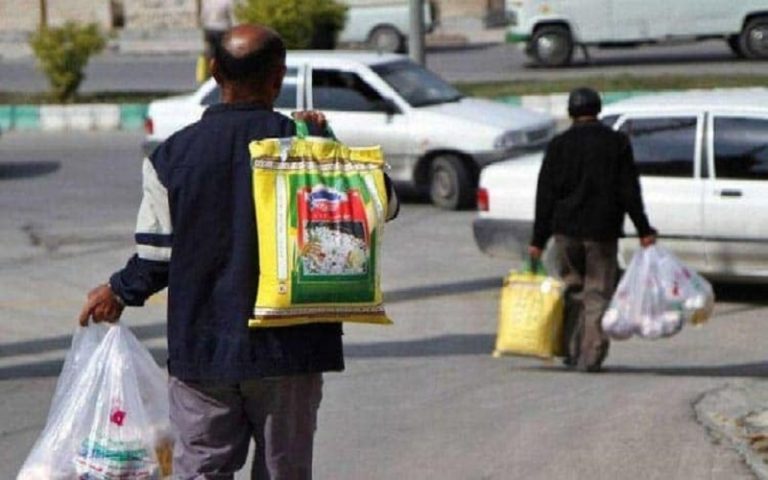
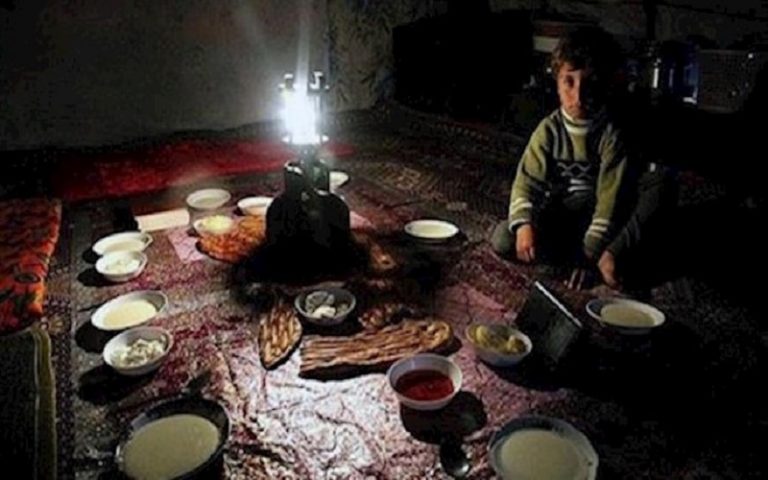
Iran: Families’ Empty Food Baskets

0
Iranian families face empty food baskets while authorities give skyrocketing loans to their relatives to dine shark fin soup and import expensive fruits

By Pooya Stone

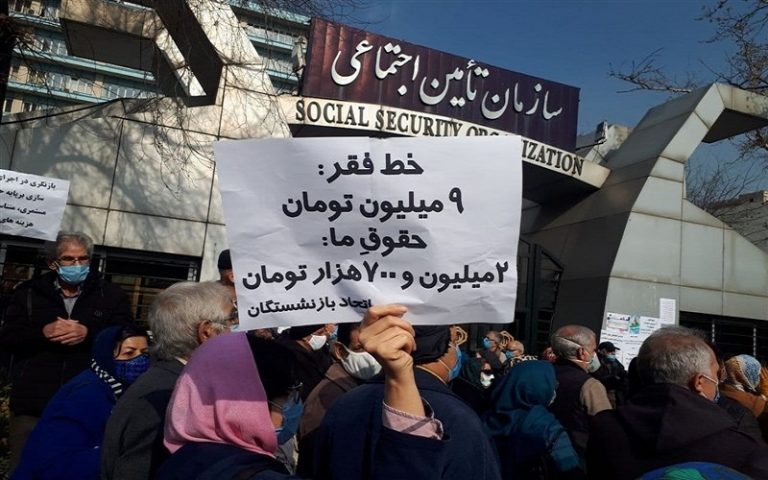
These days, the people of Iran bear intolerable economic pressures and many families cannot provide sufficient foodstuffs. Long ago, many citizens have fallen below the poverty line and now, they are scrambling to stay above the misery line. In other words, they struggle to remain alive.

In such circumstances, the minimum price of essential supplies rises every day while paychecks are fixed. Furthermore, many citizens have been bankrupted due to the government’s economic mismanagement and inattention to small businesses. In this context, unemployment numbers are skyrocketing.

On September 24, Arman daily pointed out a rampant increase in prices, severely affecting people’s living conditions. In its piece titled, “Families’ empty food baskets,” Arman reckoned that the current high-prices originated from the rise of the foreign exchange rate—dropping the national currency rial against the U.S. dollar.

“These days, a surplus pressure has been applied to working-class families. This pressure would be increased as much as these families have no longer capability due to empty food baskets and small product baskets. The poverty, the decrease in purchasing power, and the increase in social rift have reached a level that cannot be ignored easily,” Arman wrote.

The Widening Gap Between Iran’s Rich and Poor

“Currently, the food basket of a labor family of three has reached 76 million rials [$275] in Alborz province and 90 million rials [$325] in metropolitans. These numbers do not have any harmony with workers’ 26-million-rial [$95] paychecks. Laborers suffer from a 50-million-rial [$180] gap between their salaries and expenditures. In this respect, workers’ paychecks do not cover the costs of even ten days,” said Mohammad Sayyah, a member of the Labor Supreme Assembly managing board in Alborz province.

In the past, people—even the poor— were able to purchase bread, dairy, and eggs. However, given the high prices, these people have lost their purchasing power to provide even these basic goods. Removing these foodstuffs has placed the society on the horizon of emerging malnutrition among different classes.

“Each person must receive a daily use of 320g bread, 100g rice, 20g pasta, 26g beans, 70g potatoes, 280g vegetables, 48g red meat, 50g white meat, 24g eggs, 225-240g milk or dairy, 35-40g of oil, 40-50g carbohydrates and sugar,” a professor of food science explained about the calories an adult person needs based on a healthy food basket, according to Aftab News website on September 1.

Notably, a single person would need more than 10 million rials [$40] to provide such a food basket. This is while Iranian families are not at all capable of paying these costs. Moreover, the prices of these goods are continuously rising.

On September 24, Mardom Salari daily highlighted the economic weakness of working-class families in a piece titled, “Monthly salary of a worker is spent in less than ten days.”

“According to the Statistics Center, Iranian families’ expenditures have increased by 34 percent in the past 30 days. This increase imposes more costs on families in the non-official market and on the ground. With the current paychecks based on workers’ minimum wage, a labor family cannot provide for even ten days of a month,” the daily wrote.

On the other hand, while many citizens face troubles in purchasing cheese, butter, and eggs as essential foodstuffs, talking about the consumption of red meat, chicken, and fish is likely a joke. For instance, up to June, the price of cheese was 400,000 rials [$16] per kilo. Now, Iranian families pay 800,000 rials for the same amount of cheese.

Remarkably, these are only a portion of the problems that families of employees and workers deal with. However, hundreds of thousands of people have recently been unemployed. Also, there are contract, temporary or seasonal workers whose salaries do not reach 10 million rials [$40] per month.

Hadi Abavi, secretary-general of the Higher Association of Labor Unions, in an interview with Mashreq daily acknowledged that just “bread and boiled potato” constitutes the “workers’ food basket.”

“If workers received their minimum paychecks, in the best conditions they could cover only one-third of their expenditures. When a worker cannot feed his family and fills his family’s food basket with bread and boiled potatoes, how can they purchase sanitizers and hygiene necessities, or benefit from proper nutrition?” he questioned.

“Also, many workers must attend workplaces due to their in-person careers. They produce sanitizing goods, foodstuffs, and other cargo that cannot be shut down. Is it possible to shut down bakeries or groceries? They are exposed to the novel coronavirus risk. And in such circumstances we are also witness rising unemployment and decrease in revenues,” Mashreq quoted Abavi as saying.

Iran claims It Will Reduce Inflation While 45 Million Have Inadequate Income

Furthermore, many people, including particularly young couples, must pay skyrocketing housing rents and this issue adds insult to their injuries. All the while, state-linked individuals and entities have shaped a housing mafia with millions of empty houses across the country. However, the majority of Iran’s population is in poverty, facing high-prices, unemployment, and displacement, while officials say the number of people who spend their nights on roofs, cars, graves, and caves is increasing in alarming fashion.

It is worth noting that these dire conditions are not summarized in working-class families. In the 2017 Presidential debate, the current Speaker of the Parliament (Majlis) Mohammad Bagher Ghalibaf implicitly declared that only four percent of the society benefit from proper economic conditions.

In other words, in 2017, 96 percent of Iran’s population faced economic dilemmas based on Ghalibaf’s remarks. Given official stats, this population has tolerated severe pressures during the past three years due to the rial’s devaluation, dropping oil prices in international markets, and the government squandering billions of national resources on terrorism, warmongering advancing ballistic missiles, and expanding nuclear projects.

In such circumstances, high-ranking officials and their relatives are ordering shark fin soup in Tehran’s luxury restaurants. The government gives them multi-billion-rial loans to import exotic fruits with special refrigerators. Chief of the Orchardists Union mocked the government’s counter-smuggling and contradictory policies says, “Certainly, expensive fruits are not imported by Kolbars [poor porters in Kurdistan province],” according to Channel Six TV on October 5, 2019.

This is while state security forces annually target hundreds of Kolbars, killing or injuring them mercilessly. Some of them are educated people who have been forced to make ends meet through excruciating jobs due to the government’s imprudence in recruiting their talents and capacity.

A significant number of citizens are also selling their body organs and even their newborn babies to pay their backbreaking expenditures. On the other hand, families face a growing rate of skyrocketing prices for essential necessities. These enormous financial pressures, along with systematic corruption and discrimination, have created severe distrust among the people.

Budget Settlement Reveals Systematic Corruption in Iran

“Let off Syria, think about us,” was frequently chanted by fed-up people in the latest round of nationwide protests. Now, Iranians seem to grasp that the government, neither “reformists” not “principalists,” are actually thinking about them. Therefore, they continuously launch rallies protesting the government and state-backed CEOs who merely line their pockets with the impoverished people’s meager savings. However, these protests will not remain small forever and the Iranian people’s “Nitrate of Disappointment depot” will explode soon.

Iran Children Cannot Afford School

0
Iranian officials brag about remote and semi-remote education while many citizens, particularly working-class people, cannot afford online-classes' expenditures
Iranian officials brag about remote and semi-remote education while many citizens, particularly working-class people, cannot afford online-classes’ expenditures

By Pooya Stone

An Iranian government official has admitted that many workers can’t afford to keep their children in education.

The most substantial problem right now is that workers cannot afford things like mobile phones or laptops, which would allow their children to access online learning made essential because of the coronavirus pandemic, but that’s far from the only barrier between Iranian children and education.

Hamidreza Imam Gholi Tabar, Inspector of the Supreme Assembly of Workers’ Representatives, told the state-run Tasnim news agency on Friday: “In recent years, the people, especially the workers, have been affected by the most severe economic pressures such as rampant inflation, declining incomes, and declining purchasing power, increasing poverty, and recently, coronavirus, an uninvited guest has been added to this list. These problems have overshadowed the management and normal life of the workers and have led them to a dead-end in covering their daily expenses.”

Indeed, the cost of tuition fees, registration fees, uniforms, accessories, and stationery, all adds up, even in normal times, and the people can barely afford to pay for food and bills, let alone schooling when 80% of the population live below the poverty line.

60 Million Iranians Below the Poverty Line

Imam Gholi Tabar said: “If no practical solution is found to solve the above challenge, workers will certainly prevent their children from continuing their education due to lack of sufficient income. Because in the shadow of discrimination and the lack of any support for the working class and the vulnerable sectors of the society, survival will be their first priority and the education of their children will be at a much lower priority.”

This will no doubt lead to a whole generation of children forced to work as working children and lacking the needed education for many careers, thus limiting whatever social progression there may have been so far.

On Wednesday, parliament discussed the people’s living conditions, with Hossein Khosravi asking “Do not you hear the cries of different classes of workers and employees, such as preschool teachers, contract teachers, the disabled, the workers of telecommunication company, and the children of the martyrs, many of people who are drowning in problems, outside the parliament?”

A Part of Khamenei’s Economic Empire in Iran 

On Tuesday in Parliament, MP Shiva Ghassemipour said: “The way things are going, in the next few months, the bread will disappear from the people’s tables, as has happened with meat and eggs… Our officials don’t do anything to help the impoverished segments of society, whose numbers are increasing every day. When did we promise to create havens for the rich, give shelter to the corrupt, and deprive the poor of the power to buy eggs?”

Twenty Iranian Inmates Attempt Suicide in Only Two Weeks

0
Given the Iranian prisons' dire conditions, around 20 prisoners committed suicide in the past two weeks
Given the Iranian prisons’ dire conditions, around 20 prisoners committed suicide in the past two weeks

By Jubin Katiraie

Some 20 inmates at Urmia Central Prison, northwestern Iran, have attempted suicide in just two weeks due to the horrific conditions they are subjected to in prison.

An informed source said: “[Inmates] cannot tolerate prison conditions. In response to the prisoners’ protests, prison authorities give out psychedelic pills. After a few days of using these pills, the inmates lose mental control and try to commit suicide. The latest case was a prisoner from the minors’ section who broke a window and tried to eat the shattered glass to kill himself. He is in critical condition.”

Amnesty International: Iran Uses Torture as Punishment

They said that most of the inmates who are in an unstable mental state are in Section 14 and the “Consultation” section.

Prior to this recent spate of attempted suicides, Farzin Nouri and Hadi Rostami attempted suicide with poison on June 30, and in May, Mohammad Ghaderi attempted suicide to escape torture by the Intelligence agents.

The conditions are awful, unhygienic, and with no separation of prisoners based on crime.

In related news, an increased number of inmates and a severe lack of hygienic conditions at Sheiban prison of Ahvaz, southwest Iran, had led to a jump in the number of prisoners contracting the coronavirus over recent months.

After riots at Sheiban and fellow Ahvaz prison, Sepidar, in March over the lack of response by prison authorities to the coronavirus, which should have seen lower prisoner numbers and increased hygiene, the regime transferred most of the inmates at Sepidar – including all political prisoners, death row inmates, and those sentenced to less than five years – to Sheiban prison.

One source said that the number of political prisoners on ward 5 tripled from 100 to 300 in just one month with the numbers rising daily, even though the ward has just 100 beds, which means that the majority of prisoners are forced to sleep on the dirty floor, in corridors, and in front of toilets and showers.

Additionally, due to limited space, over 60 people are forced to sleep in a 25-square-meter room, which the source said means that the people are forced to sleep in cramped conditions, unable to move until the morning.

All this means that a large number of prisoners are already infected with coronavirus and prison officials are preventing reports from leaking to the outside world.

In July, Amnesty International reported that Iran’s prisons are “catastrophically unequipped for outbreaks” and that the regime has ignored repeated requests from prison officials about resources that are aimed at stopping the spread of the disease or treating prisoners who are sick. This included things like bleach, personal protective equipment, soap, and medical devices, but the regime never even responded to the letters, let alone provided any of the needed equipment.

Crime Against Humanity: Iranian Regime Kills Political Prisoners With the Coronavirus

Iranians Call for Dissolution of IRGC

The Iranian supreme leader Ali Khamenei oversees a parade of IRGC senior commanders

By Pooya Stone

Questions asked in Iran’s state-run television Channel 5 from Abolfazl Shekarchi, Spokesman and Deputy Chief of Staff of the Armed Forces, about the role of the Revolutionary Guards (IRGC) and Iran’s meddling in the Middle East is just one of the examples of the regime’s miserable situation. His defensive stance in this interview was remarkable. These questions raised skeptics in the regime after the call by Iranian opposition leader Massoud Rajavi for the “Dissolution of the IRGC” and to allocate its budget to counter the coronavirus and support the Iranian people.

Moderator: “The suspicion that every country should have a single armed force, you say that this is true in our ideological debate, now what about the protection of borders?”

Shekarchi: “Protecting the ideological borders of the holy system of the Islamic Republic and the Islamic Revolution, in addition to being with all institutions and devices and even the army, is its inherent mission with the Islamic Revolutionary Guard Corps.”

Moderator: “And do their works not interfere which each other?”

Shekarchi: “No, they are perfectly compatible with each other. This is the difference between our armed forces and the of the other countries in the world.” (State-run TV Channel 5, 21 September)

The Iranian people do not need the Revolutionary Guards. This force was created from the first day with the aim of preserving Velayat-e-Faqih (supreme clerical rule), carrying out assassinations outside of the borders of Iran, as well as suppressing the people and the opposition forces. Its logo does not show any sign of Iran and Iranian nationality.

Organizing a series of failed operations in the eight-year war, after Iraq’s withdrawal from Iran, is another crime committed by the IRGC. Operation Wal-Fajr to occupy Iraqi territory with the tactic of human waves on the northern fronts in Iraqi Kurdistan to the southern fronts in Faw inflicted heavy casualties on the Iranian population.

In Operation Karbala 4, operational plans had already been leaked, but despite this, the regime carried out the operation and thousands of young Iranian men died.

Sending students as ‘disposable soldiers’ is another aspect of the Revolutionary Guards’ crimes. According to former President Akbar Hashemi Rafsanjani, nearly 36,000 school children lost their lives on the battlefields. (31 October 1997)

The terrorist IRGC Quds Force, led by the eliminated general Qassem Soleimani, has played a key role in igniting proxy wars in Iraq, Lebanon, Syria, and Yemen. The purpose of this force was to export terrorism to neighboring countries and to create strategic depth for the Velayat-e-Faqih system.

Qassem Soleimani’s Death and the End of Iran’s Theocracy

The IRGC commander called this, “the Protection of the ideological borders of the Islamic Republic” and added: “Religious sovereignty does not really to any land, practically include all nations and all people. We see today that we are defending the oppressed people of Yemen, with the same thinking, we are defending the oppressed people of Palestine, and now with the same thinking we are protecting Non-Muslim nations, from the Black people in the US who are now dying under the boots of the oppression, we are defending them.” (State-run TV Channel 5, 21 September)

The functions of the Revolutionary Guards for the supreme leader Ali Khamenei, in addition to exporting terrorism, are to play a role in domestic repression. The establishment of the large ‘Sarollah’ base to suppress the uprising in Tehran is another aspect of this role. This is what Shekarchi calls ‘internal security’ in his televised interview.

Questioner: “You said that the IRGC is an ideological border. Where is our ideological border? You mean the ideological border is once Palestine, and once Yemen, does it not interfere with defending our geographical border?”

Shekarchi: “You see, it is not that the IRGC has no mission inside the country, it certainly has a mission. But we must prevent the infiltration of foreigners, deal with the hypocrites [the regime’s derogatory label for the opposition Mojahedin-e Khalq (MEK/PMOI)], ensure the internal security of the country. These are all missions of the IRGC.” (State-run TV Channel 5, 21 September)

Shekarchi’s remarks only reaffirmed the contention that the IRGC is an unnecessary force with malign activities and is wasting the people’s resources.