

U.S. House Stands with Iranians’ Desire for FreedomThey had attended the event to declare their support for the NCRI and its President-elect Maryam Rajavi for replacing the religious fascism ruling Iran with a democratic government, which is intolerable for the ayatollahs. Following the attack’s failure, Iranian officials, including Foreign Minister Mohammad Javad Zarif, tried to evade responsibility. Zarif described it as a “false-flag operation” on the eve of President Hassan Rouhani’s visit to Austria while the foreign minister’s agent had been arrested with sufficient evidence. The arrest of a diplomat on duty sounded alarms about the Iranian government’s exploitation of diplomatic privileges to target dissidents. In December 2018, the Albanian government expelled the Iranian ambassador and his deputy from its territory for involvement in a bomb plot against members of the main Iranian opposition group Mojahedin-e Khalq (MEK). Several of Tehran’s lobbies attempted to attribute the attack to rogue elements. However, in November 2019, Zarif rejected this theory at a Parliament (Majlis) public session. “We are not an institution to act by ourselves. Is it possible to do something in this country without reporting?” he said. “Assadollah Assadi is not an exemption. He is the normality,” said former Italian Foreign Minister Giulio Terzi, who was a potential victim of the plot. These malign behaviors prompted many prominent figures, particularly potential victims of Assadi’s plot in France to file a complaint against Tehran’s terrorist agent and his co-conspirators. On October 22, several of them attended an online conference hosted by the NCRI and discussed the Iranian government’s terror activities on European soil. They demanded EU leaders shut down Iranian embassies as centers of coordination and logistic providers for terror attacks.
EU Must Adopt a Firm Policy Against Tehran’s Terror Attacks
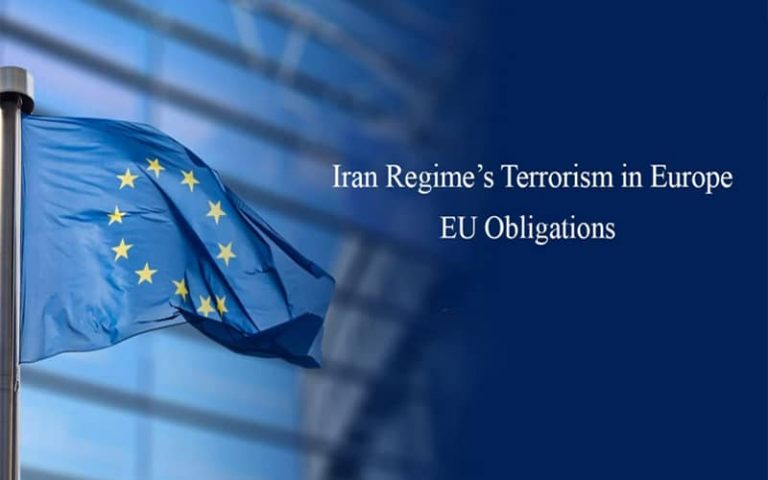
Two years ago, on June 30, 2018, European law enforcement managed to foil a terror attack in Villepinte, suburb of Paris. In a joint operation, Belgian, German, and French authorities disbanded a terror squad commanded by a senior Iranian diplomat Assadollah Assadi.
Belgian prosecutors called the group a “sleeper cell,” which provided details and prepared a bomb attack against the Iranian opposition gathering. At the time, the National Council of Resistance of Iran (NCRI) held a grand meeting with 100,000 supporters and hundreds of distinguished politicians, MPs, human rights defenders, and former officials from around the world.
End of Tehran’s Joy Over the Lifting of UN Arms Embargo
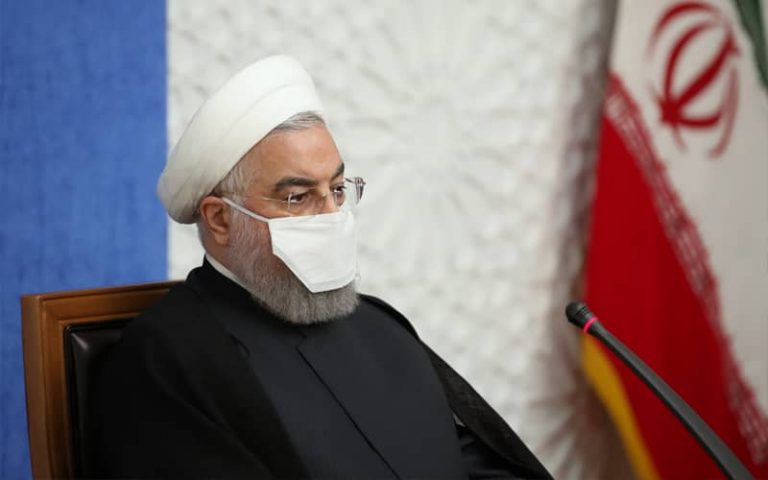
Until October 18, Iranian authorities tirelessly touted lifting the UN arms embargo as a significant achievement. President Hassan Rouhani and Foreign Minister Mohammad Javad Zarif bragged about their fruitful foreign policy. They had even stepped further and portrayed this “achievement” as a lifeline for trade and achieving colossal revenue.
However, they did not specify who is supposed to purchase Iranian arms and how Tehran would receive the money? They did not and could not blame U.S. sanctions for the lack of customers and the market.
The fact that extremist groups and outlaw states—such as Lebanese Hezbollah, Iraqi Shiite militias, Yemeni Houthis, and Bashar al-Assad dictatorship—are Tehran’s sole clients. Apart from them, there are no legal states that prefer to purchase weapons from an unstable government instead of from prominent and well-known companies.
Moreover, neither China nor Russia would purchase Iranian armaments. They were looking for a market to sell their weapons. However, they will receive nothing in return for their weapons. Why? Because, in December 2019, the Iranian authorities refused to join the Financial Action Task Force’s bills and thus cut the country’s banking system from the international monetary bodies.
Auctioning Iran, for a Dirty Vote at the UN Security CouncilThe ayatollahs have no more money to purchase weaponry systems and their dire economic conditions reveal this reality. On October 21, the chief of State Security Forces (NAJA) Brigade Gen. Hossein Ashtari complained about the shortage of the NAJA’s budget at the Parliament (Majlis) session. In recent months, the price of almost all essential goods dramatically increased. The national currency Rial’s value has unprecedentedly dropped against the U.S. dollar and the exchange rate for each USD stands at over 320,000 rials in the free market. Furthermore, there has been no day without employees and workers’ protests for their delayed paychecks and arrears in Iran. Meanwhile, the novel coronavirus has deteriorated the country’s economic power. However, most importantly, it has diminished public trust, and even the most loyal forces to the supreme leader Ali Khamenei criticize the government’s approach against the health crisis. In such circumstances, as people’s rage is going to erupt, foreign pressures are the ayatollahs’ last concern. They relentlessly search for an income-resource to ease society’s fury. Since April, when they lifted health restrictions and compelled citizens to opt between the coronavirus and starvation, many people fell victim to the disease. Now, regarding the unprecedented daily COVID-19 death toll, which reached 337 on October 19, they even deal with objections among their inner circles. In this respect, political rivalries have amplified and MP Mojtaba Zol-Nour, chair of Security and Foreign Affairs Commission, spoke about executing the president. “The majority of the Iranian people today will not be satisfied with less than your dismissal, and the Supreme Leader should order to execute you 1,000 times,” he said on October 18. Therefore, lifting the UN arms embargo, as Rouhani’s significant achievement, not only did not bring privileges for the Iranian government but also exposed cracks and failures. Rouhani finally admitted that it was merely a hollow gesture. “Our arms embargo was lifted. It is not important how many weapons we can purchase or sell. It is important to obtain our rights. The people are in dire conditions, but they must realize our worldwide political successes,” Rouhani said in the October 21 cabinet meeting.
UNSC Votes for an Arms Race at the Expense of Iranian People
Iran: Nine Economic Protests in Two Days
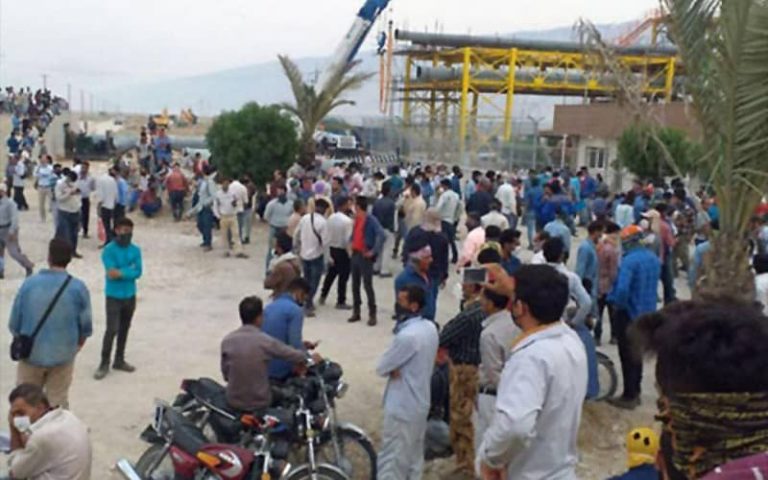
The Iranian people held nine protests over economic concerns, with many demanding unpaid wages, on Monday and Sunday. Let’s look at a quick breakdown.
Wedding Hall Owners
Roughly 40 wedding hall owners and employees gathered outside the Tehran Guilds Chamber on Monday to protest the coronavirus (COVID-19) restrictions that shutdown their place of business.COVID-19 in Iran: 337 Is Not a Number, It Is a Heartbreaking Story of Human LossThe head of the Wedding Hall Union said that wedding hall employees, bridal gown vendors, and wedding photographers have all become unemployed. He said: “It has been about nine months that wedding halls have been shut down, and hall owners do not have any other source of income.”
Defrauded Car Buyers
People who bought an Azvico car three years ago and are still yet to receive their vehicle (6,000 in total) held a protest outside the Industry, Mine, and Trade Organization in Tabriz to demand their undelivered cars.Livestock Farmers
Farmers gathered outside the Judiciary in Tehran to protest the high price and scarcity of feed for their animals, which is the result of the government’s mismanagement. One farmer accused the authorities of importing meat from Brazil and not supporting Iran’s farmers, who are going bankrupt.State-Backed Mafia Removes Red Meat From Iranians’ Food Basket
Petrochemical workers
In Mahshahr, southwestern Iran, petrochemical workers rallied to demand their unpaid wages. This came two days after workers at the Parsian Gas Refinery Company in Lamerd went on strike to demand that their wages dating back to June be paid.Family Law Protesters
Iranians gathered outside the Islamic Consultative Assembly Building in Tehran to protest Iran’s “family laws”.Firefighters
Firefighters in Dehdasht gathered on Sunday to demand the three months’ worth of unpaid wages that they’re due. One firefighter said: “It has been two years that I developed asthma due to work conditions. We have not received overtime payment and now it has been three months that we have not been paid our basic wages.”Beetroot Farmers
Beetroot farmers in Naqadeh, northwestern Iran, protested outside the Soldoz Sugar Factory over non-payment for goods provided.Oil Industry Pensioners
In Ahwaz, southwestern Iran, and Isfahan, central Iran, pensioners gathered to protest changes to the Oil Pension Fund Code, which has taken some of their pensions away. Representative Abdulsaheb Ghalebi said that because pensioners were “vulnerable, elderly and ailing” and have unemployed children, they cannot make ends meet without their pension.Iran: August Marked by Hundreds of Protests
Hamidieh Municipality Workers
Employees of the Hamidieh Municipality marched to demand their 15 months’ worth of unpaid salaries.Iran’s Government Arrests Youth in Connection With November 2019 Protests
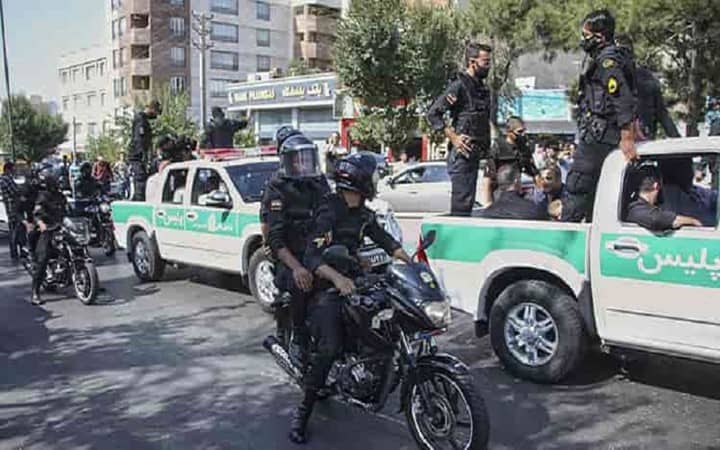
On October 14, the East Azerbaijan police commander announced the arrest of 176 young men under the pretext of thugs. According to him, these arrests were made in honor of Iran’s State Police or Niruy-e Entezami-e Jomhuri Eslami (NAJA) Week. But the issue has nothing to do with NAJA week or any other occasion created by the government. Rather, the repression of so-called ‘thugs’ is due to the government’s fear of the youth on the eve of the anniversary of the November 2019 protests.
New Wave of Arrest in Tehran
On September 28, Hossein Rahimi, the police chief of Greater Tehran, announced the arrest of 389 people, who he labeled ‘thugs’. While three weeks ago, there was no occasion called NAJA week. Rahimi said he did so at the repeated request of the people, and that the arrests were the fifth step in their plot. He explained that for these arrests, 125 neighborhoods have already been identified and in a coordinated operation, this number of young people has been arrested.Protesters of November Protests Still Missing – Families Under Pressure to Say They Support the Regime
The Arrest of Youth in Gilan
On October 1, Azizallah Maleki, the police commander of Gilan, stated, that during a plan, 26 people were arrested who disturbed the order and security of Rasht, Langrud, Anzali, and Siahkal cities. He also called the detainees thugs. He stressed that those who disrupt the order and security will be dealt with decisively. In this regard, cyberspace will be regularly monitored. Until there is no safe place for such people. Such arrests and attacks have taken place in other provinces of the country. Which are all with the same theme and with the same purpose. Security forces in every city of Iran, in the name of fighting thugs and maintaining security in cities and cyberspace, arrest young people and throw them in prisons.Degrading Youth in the Name of Public Order
On October 12, the repressive forces of the clerical government took another inhumane act to intimidate the youth. With a show accompanied by the torture of the accused, they put several young people in a car and drove them around the city. Revolving with constant beatings and pressure to insult themselves. This shocking spectacle quickly spread in cyberspace. There was a wave of internal and external disgust. These barbaric and hateful moves provoked much opposition. And showed the inhuman face of the ruling ayatollahs on the world. On October 14, the judiciary chief Ebrahim Raisi came on the stage and condemned this inhuman show in fear of the people’s reactions, saying that such acts were done without judicial permission.What Is the Iranian Cyber-Army’s Mission?This criminal cleric did not comment on other issues, such as the amputation of fingers and the demolition of poor people’s houses, as well as the cutting down of old trees that are being carried out on a daily basis around the country. He did not state any of them that they have been done without judicial permission. Such an approach indicates that he was forced to retreat from his decision when faced with a wave of global opposition.
The Means of Security in Iran
The law enforcement commanders of this administration have set up the arrests in every Iran’s city, their message was that they wanted to establish security. What is the meaning of security in this clerical culture? In a word, for the current rulers, security is summed up in maintaining the survival of this system. Any move that is against their survival is considered as an act against the security and the perpetrator is considered to be disturbing their order and stability, who should be arrested and punished.Arbitrary Arrest of Youth in November 2019
In November 2019, more than 12,000 young people were arrested at the scene and in the days that followed. By identifying photos and videos taken at the scene. Or obtained by CCTV cameras. A large number were arrested in the following days. All these young people are against the security in the eyes of the ruling and their repressive officials. There were those who endangered the security of the system. Over the past few months, there has been a clear wave of popular opposition and discontent. Unemployment, poverty, and coronavirus, like a plague, have destroyed their entire lives. These misfortunes have not gone unanswered and led the youth of the country to fight against these injustices. The people, workers, and especially the show at every opportunity, by any means, that they are tired of this government and want to overthrow it.Resistance Units Symbolize Young Iranian Rebellion
Setting fire on repression centers and mobilization bases are among the targets that are attacked daily by the Resistance Units, affiliated to the opposition Mojahedin-e Khalq (MEK). The writing of slogans calling for the death of the dictator and other slogans expressing the illegitimacy of the ruling government on the walls of cities is being done in abundance. The photographs and banners of former Revolutionary Guards (IRGC) commander Qassem Soleimani and the Supreme Leader Ali Khamenei are torn or burned in every location. This is what is considered to be detrimental to the security of the system, and in terms of the clerical rule, the perpetrators must be arrested and punished. It is for this reason that the closer we get to the anniversary of the November protests, the more the ruling ayatollahs try to suppress the protests again. In the case of the death of Mohammad-Reza Shajarian, a popular Iranian singer, it was shown that any popular gathering, for any reason and on any occasion, would quickly turn into an anti-government movement. On the first night of Shajarian’s death, while his body was still in the hospital, the crowd in front of Jam Hospital, in addition to honoring and celebrating this popular artist, also raised their voices against the dictator, with the slogan ‘death to the dictator’. Such slogans are the death knell of the rulers and are against the security of the system.Iran: “Arresting the Leaders” of the Uprising; Why?
Over 50,000 Girls Go Hungry Every Day in Iran
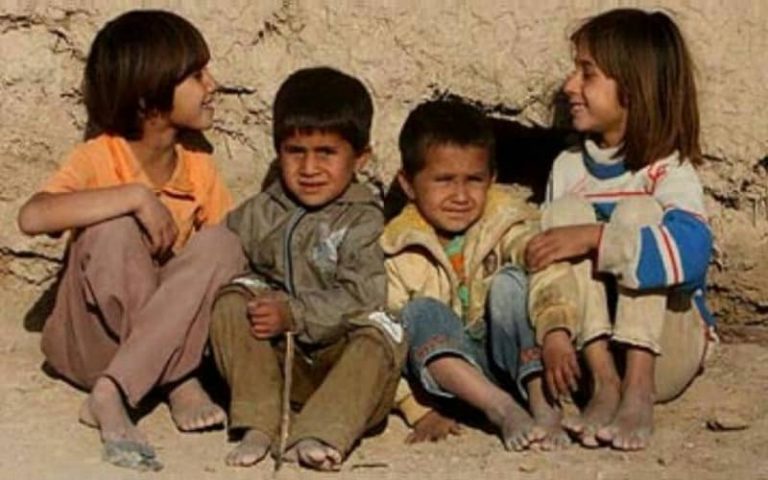
Thousands of Iranian girls are going hungry every day, resulting in malnutrition that will have devastating long-term effects on the overall physical and mental health of them for years to come.
The main reasons for malnutrition, which is far too common in Iran especially for children under five, is poverty and limited access to healthy food, and will likely lead to impaired development, more expensive medical treatment, and doing badly in school.
This is worrying for the newest generation of Iranian youth, so the Women’s Committee of the National Council of Resistance of Iran (NCRI) is drawing attention to this to mark World Food Day.
60 Million Iranians Below the Poverty Line
Iranian Media Admit to Tsunami of Starvation Among Children
Of course, the government is desperate to prevent bad news from getting out, so they obscure the true figures, but even the artificial and downplayed statistics are horrifying. The state-run ISNA news agency says that 54,076 girls aged five or under are suffering from malnutrition, while the Health Ministry claims this figure is actually 50,000 children total, but that is disturbingly the best-case scenario. Other state-run media sites have reported that there are 137,000 to 200,000 malnourished children, as a result of poverty, with the higher figure being from 2017. Given that poverty has risen dramatically in Iran since then, with 60 million people living below the poverty line, it’s not possible for the number of starving children to have dropped by 75 percent. The Health Ministry also identified 67,000 pregnant women as being at risk of starvation.Iranian Children and Pregnant Women Are Exposed to Malnutrition
All of these statistics are higher in provinces of high poverty, including Lorestan, Sistan and Baluchestan, Hormozgan, Ilam, Kohgiluyeh and Boyer-Ahmad, Kerman, and Khuzestan. The government claims to be proving food parcels to these families, but the fact is that these are sporadic and limited, with many children left to starve. This is not an effective policy and actually is just an excuse for high-ranking officials to take a big paycheck for overseeing the food basket program, which leaves less money to provide for the children. This unchecked malnutrition has weakened the immune systems of women and girls, making it more likely that they will contract the Coronavirus, while food insecurity will increase because of the pandemic. Of course, it is the responsibility of a government, under Article 24 of the Convention on the Rights of the Child, to make sure that children receive the highest standard of treatment for illnesses and prevention of harm. The ayatollahs do not seem a bit interested though.Iran – All This Poverty and Misery, a Storm Is Brewing
Report on the major bread shortage in Iran
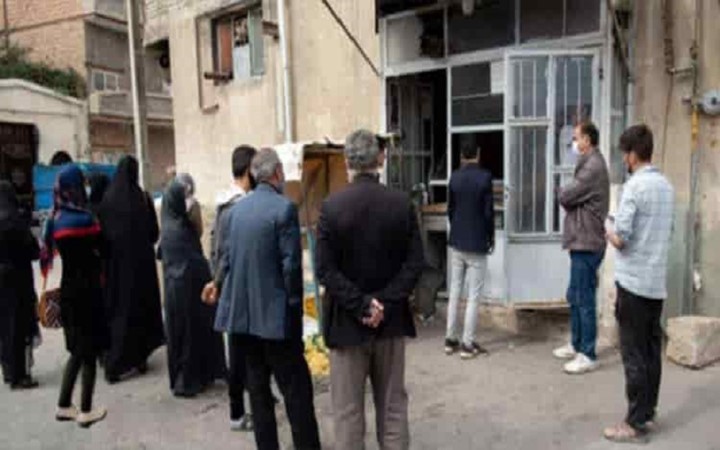
The first news of a shortage of bread and its high price in Iran came from Khuzestan, and then from Urmia, Tabriz, Karaj, Shahriyar, Mahdasht, Lorestan, Neka, Kurdistan, Mashhad, and other parts of the country.
In some areas such as Zabol and Mashhad, there is no shortage of bread, but its price has increased, and in a metropolis such as Tabriz, the price of bread has increased by 30 to 50 percent. In some cities, such as Karaj and Neka, a number of bakeries have closed due to lack of flour.
In other cities, such as Urmia, Marivan, Chaipareh, West Azerbaijan, and Saqqez in Kurdistan, bread can be bought in limited quantities only after a few hours of staying in the queue.
Gradual Increase in the Price of Bread, Another Deceptive Step by Iran’s Regime’s to Loot the Peoplehttps://www.ncr-iran.org/news/in-iran-foreign-adventurism-and-domestic-repression-share-a-high-price-tag/ State-run daily Javan Online on 6 October wrote: “The problem of bread in Urmia has reached such a level that some people even sell ten tablets of it for 100,000 rials [$0.33] using the mobile software ‘Wall.’” The “bread” crisis is slowly spreading across the country. Bakeries are in limbo. People are waiting in line for a few loaves of bread, and the government is just talking. It is as if the government is the most undecided. It has neither the power to make a decision nor the power to make any changes. This lockout of the government stems precisely from the complete despair of finding a solution to the situation. Doubling the dough and 50 percent freight prices have put bakers under a lot of pressure. Bijan Norouz Moghaddam, President of the Traditional Bakers’ Union, said: “We have written to all relevant officials regarding the increase in the price of bread to clarify the task of the bakers, but we are still undecided.”
Popular Reports
A citizen from Sanandaj said: “In our city, a person was secretly picking up a loaf of bread for free sale! My father, who is a baker himself, protests and says that people do not have bread, why are you stealing people’s rights? He attacks my father, breaks my father’s phone, and says, ‘I am an intelligence officer can arrest you, and teach you a lesson!’” In Saqqez in Iran’s Kurdistan, it has been difficult to prepare bread for more than a week. Due to the lack of flour, the bakeries’ bread runs out at 10 am and just 20 loaves are sold to anyone.Miandoab – Barouk, the Problem of Bread Shortage Continues
One of the residents of the Barouk section of Miandoab said, “We have neither bread nor a bakery! We do not have flour to bake bread.”People say
The bakers are right, and they are saying the truth. Everything became more expensive except for the bakers’ wages. Bread is not baked for eating in some bakeries. Bakers supplied part of their flour needs from the market, which is not cost-effective from the open market due to its high cost. But in the meantime, the CEO of the State Trading Company of Iran claims that: “We have no problem in preparing flour and bread, while the amount of strategic reserves in the country is also unique!”Bread smuggling in Kurdistan!
The head of the Saqqez Industry, Mining and Trade Department said: “In order to implement the provincial decrees banning bread from leaving Kurdistan, a car carrying one thousand loaves of bread that were going to be transferred from Baneh county to neighboring cities was stopped in Saqqez.” Due to the shortage of bread in the neighboring cities of Kurdistan province for several days now, a number of abusers in this area are selling bread and flour illegally. The bread crisis, which started in Urmia and Tabriz, has now spread to other cities. Along with the Coronavirus epidemic, an epidemic of hunger is spreading between the people. Since the government says in this particular case that we do not have a shortage of flour and have sufficient strategic reserves. If the government is right, then this crisis should be sought due to the government’s profiteering from the people’s bread and flour.Removal of Subsidies Will Put Further Strain on Iranian Families
Government’s Profiteering Policies Are the Root of Crises
Reducing the share of bakers’ flour forces these poor businessmen to procure part of their shortage from the market. And this purchase is not for the benefit of the bakers and they cannot afford it. On the other hand, with the rise in the price of sourdough and the price of transportation, bakers can no longer sell bread at the same price as before. The government expects the people to pay all these costs, instead of paying the difference and also covering the wage costs of the bakery workers. This has created a crisis that is spreading to all cities and there does not seem to be a will in the government to solve this problem. On October 4, Jabbar Kouchaki Nejad, MP from Gilan province, said: “We currently store 14 million tons of wheat in the country, while our annual consumption is 12 million tons, and in addition to the organization, we have stored wheat, there is a problem in the distribution system.” The price of bread since the first days of October: Head of Tehran Province Industry, Mining, and Trade Organization: In the subsidized bakeries section:- Barbary with 8,300 rials [$0.028] flour for 10,000 rials [$0.03]
- Sangak with 8,150 rials [$0.027] flour, 12,000 rials [$0.04]
- Taftoon with 8,200 rials [$0.027] flour, 5,500 rials [$0.015]
- Lavash is offered with flour at 8,200 rials [$0.027] at a price of 3,000 rials [$0.01]
COVID-19 in Iran: 337 Is Not a Number, It Is a Heartbreaking Story of Human Loss
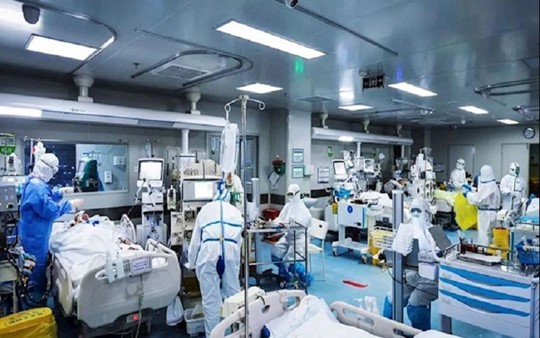
The COVID-19 pandemic in Iran is out of control. While until now the Iranian government was trying to prevent the spread of the truth, now the truth forced it to show just a little of what is happening in Iran.
In an interview, Minoo Mohraz, a member of Iran’s National COVID-19 Taskforce, referred to the crisis of the coronavirus and said: “The situation is very deplorable. It is too late for quarantine because the coronavirus is in a terrible state all over the country. Tehran in particular is in a more dire situation. In no period during these few months have we had this number of hospitalizations and this number of patients and deaths.
“I also wonder why the National COVID-19 Taskforce does not impose a shutdown or take restraint seriously. According to medical science, there should be shut down. I am not involved in political issues to find out why they do not establish holidays. The non-closures are politically motivated, not medically based.”
COVID-19 Turns Iran into Red Status: Health OfficialReferring to the high costs of hospitalized patients in the ICU, she said: “One night in an ICU costs several million (Tomans). There are currently 4,700 people hospitalized in the ICU. Calculate how much that is and calculate how much the government will pay for it.” Minoo Mehrz, referring to the complicated conditions of the medical staff and their exhaustion, added: “The treatment staff has been working hard for several months. They still work with love and compassion, but physically they are in a different state. The work of the doctors always has shifts and night work. But not so much. I had not seen so many critically ill patients and deaths in all my 45 years of medical practice. Watching this level of mortality also tires the medical staff. These are issues to consider.” Even Iran’s President Hassan Rouhani was forced to confess about the dire situation as he said: “All over the country in different provinces today we are facing a wider wave of this virus and we have to deal with it. Now, how long we are involved, we must be pessimistic and say, for example, that this problem will advance us for another year. That is, we must all believe that the conditions of 2020 and probably 2021 are different from those of previous years.
25 Million Iranians Have Contracted Coronavirus, 30–35 Million Others Are Exposed to Virus: Rouhani“Today, the number of our patients has increased from 4,000 to 8,000. This is not a problem, this is not important, but on the other hand, it is important that if our death toll were 200, it became 250, if it was 250, it became 300. This means a siren of danger for all of us.” (State television news channel, 19 October) The official news agency IRNA, about the false statistics by the spokesman of the Ministry of Health, on 19 October wrote: “Black Coronavirus Monday – 337 is not a number. It is the heartbreaking story of people’s deaths. If we do not break the chain of infection, these horrible numbers will reach 600 in late October and 900 in early December.”
Infighting by Iranian Officials Due to Massive Pressure
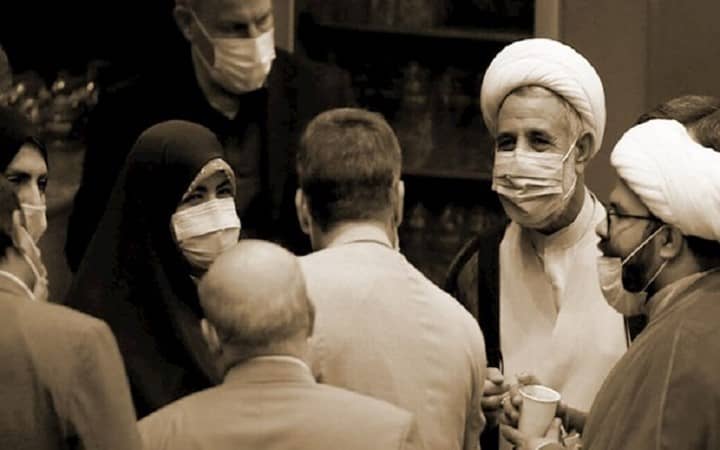
In recent days Iranian officials and other key elements have been quarreling with one other because of the massive pressure and their corrupted behaviors which is leading the country to a total collapse. Such arguments were visible in the country’s latest parliament session.
Mohammad Bagher Ghalibaf, the parliament speaker, in fear of the people’s reaction and because of the disastrous country’s situation attacked Iran’s president.
“What makes this pressure harder to bear is the mismanagement, carelessness, and tangible inattention that make people feel helpless. The least that an official can do today is to be with the people. Today, everyone should know that political disputes will do not become any bread and water for the people,” he said.
“Our main problem is that decision-makers do not focus on the day-to-day issues of people, mismanagement in making the right decisions, and ultimately do not have the real and effective will to solve problems.
“The official in charge of solving the people’s problems should not give the wrong address and cause discord within the society and increase the enemy’s greed to impose more sanctions on [Iran],” Ghalibaf added. (ICANA news agency affiliated to Parliament (Majlis), October 18, 2020)
Cleric Javad Nik-Been in the parliament session attacked President Hassan Rouhani and request his interpellation. “Where is the authority of the parliament? We, the deputies, cannot at least ask the president that he once said behind the same tribune of the parliament that if I want, I will return the dollar in the amount of 5000 tomans and 7000 tomans within two weeks. Today, the dollar has crossed the 30,000 toman mark. No one cares. People are being crushed under economic pressure,” he said. (ICANA, October 18, 2020)
Iran’s President Rouhani is anything but a moderate
The Majlis’ Presidium Attacks the President
Javad Hosseini-Kia, Member of the presidium, slammed Rouhani for the national currency’s devaluation and economic troubles. “Dear Mr. Rouhani, the recklessness of this government has ‘plunged the people into black soil’; USD rate is above 300,000 rials, inaccessible housing, increase in prisoners and dowry enforcement cases, decrease in marriage statistics and increase in divorce statistics, the shrinking people’s baskets and the fading of meat, chicken and dairy products from people’s table are the results of this negligence,” he said. “Mr. President; I wish you trusted the youth of the country instead of trusting the United States and guaranteeing a ‘Kerry’ signature, you are still looking abroad and distorting history. Today, in the context of the coronavirus, our families are unable to provide phone and tablet for their children, who either drop out of school or suffer from academic failure,” Hosseini-Kia added. (ICANA, October 18, 2020) Alireza Pak Fetrat, another member of the presidium, attributed all problems to the Rouhani administration. “Today, it is very important to invite the president to the parliament, and the president must respond in the way he has mentioned that he is the guardian of the Islamic Republic. The parliament should spend a month on economic stability and conclude with the government that if the government really cannot solve the problem, they should be treated according to the constitution,” he said. Mahmoud Ahmadi Begash, member of the presidium: “There is no expectation from the government, this government, especially the president is not really aligned with these people, as we and as our colleagues said, we are ashamed to have a president who has been in quarantine for 8 months and no one has seen him closely. We are surprised that he says that he was the deputy commander of the war in the holy defense, where is he now?”Iran’s Regime: “We Have Nothing Called Quarantine”Ahmad Hossein Fallahi, member of the presidium: “The president did not take part in the most important issue, which was the decision-making process of the three branches. According to reports, even the ministers are not able to communicate directly with the president. And in connection with the market debate, which friends pointed out, the market situation is chaotic. Every day, a price puts a lot of pressure on people. “There is no good news on the way. This shortcoming in fulfilling responsibility puts pressure on the people, and on the other hand, the media at the disposal of the government and some cyberspace blame all the problems on the system and the Supreme Leader. In the coronavirus section, one person dies every 6 minutes in the country. We have news that our casualties have multiplied compared to the first coronavirus days.” Mohammad Salehi Darani, member of the presidium: “The deplorable and unrestrained situation of the market has peeled off the skin of the people and aggravated the situation, and no one owes an ear. The executive officials of the country have quarantined themselves due to the coronavirus.”
Iranian MPs Blame Rouhani for the Country’s Failures
Ali Akbar Bastami, MP from Ilam province, said: “Today, the country’s economy is sick, but its disease is not incurable, domestic viruses have made it feverish and tense more than ever. Today, whenever we look at the economic sector of the country, we see chaos and mismanagement, and abandonment. An overview of the automotive, housing, gold, dollar, and the stock market and inflation, poverty and livelihoods, and rampant inflation prove this claim.” Valiollah Farzaneh, MP from Mazandaran province, said: “Today, one of the reasons for the high prices that are bothering people and becomes unbridled and undermining public confidence is the currency shocks caused by the oil economy. We have to acknowledge the fact that we have not been able to bring people together in this economic war like the imposed war (Iran-Iraq war), and this recklessness has reduced public confidence.” Sodeif Badri, MP from Ardabil province, said: “The staggering prices, that we have an increase on an hourly basis the people must buy their essential items at many times at higher prices as much as yesterday.”Mess in Iran’s Government
Iran Remains Publicly Confident over Embargo Expiration as US Opposition Grows
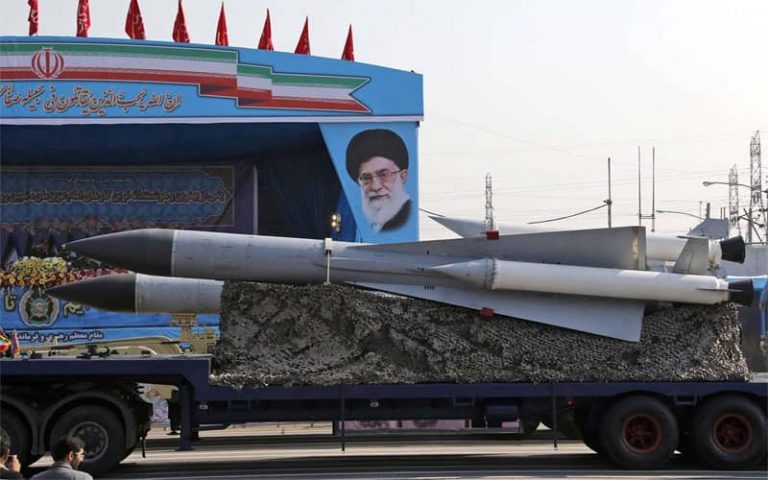
Sunday marks the formal expiration of a UN arms embargo on the Islamic Republic of Iran, but it still remains to be seen whether the relevant restrictions will actually be lifted in practice.
The United States had vigorously campaigned for an extension of the embargo, albeit with limited success. A Security Council vote in September garnered support for the U.S. proposal from only one of the council’s rotating members: the Dominican Republic. And even if other U.S. allies had joined in voting for the extension, they would have certainly been vetoed by Russia and China, two of the body’s five permanent members and two of the nations most likely to participate in an emerging Iranian arms trade.
Tehran’s Illusions over Lifting Arms Embargo
The prospect of exchanges with these eastern powers was eagerly highlighted by the Iranian government in advance of Sunday’s deadline. In a weekly press briefing on Monday, Foreign Ministry spokesman Saeed Khatibzadeh declared that October 18 would be “the day of U.S. defeat.” And in a subsequent interview with Newsweek, the spokesperson for the Iranian mission to the UN argued that the ostensible failure of U.S. efforts was a sign of growing American isolation in the face of a strategy that was meant to isolate Iran.“It is abundantly clear that the UN – and the overwhelming majority of its member states – reject the U.S.’s so-called maximum pressure policy on Iran,” said Alireza Miryousefi. But be that as it may, there is little expectation that those same countries will actively stand against American efforts to maintain such pressure via measures that include the arms embargo. After the failure of its proposal to the Security Council, the White House quickly put a back-up plan into action, invoking the “snapback” provision of the 2015 Iran nuclear deal in order to declare the re-imposition of all UN sanctions that had been suspended under that deal.#Iran|ian Opposition Reveals New Details About Military Aspects of Tehran’s Nuclear Program https://t.co/tKPaLKesaR via @Iran_Focus #IranNuclear #IranTerrorism
— Iran Focus (@Iran_Focus) October 16, 2020
Extension of Iran Arms Embargo Is an Imperative ActThis plan was similarly rejected by fellow signatories of the agreement formally known as the Joint Comprehensive Plan of Action. In their view, the U.S. waived its right to invoke the provision when President Donald Trump pulled out of the agreement in May 2018. But even though this can be expected to prevent the embargo and related sanctions from going back onto the books, it may ultimately be sufficient for the U.S. to simply act as if they have done so.
The Ayatollahs Count on Europeans as Their Savior
French, and German, and to a lesser extent British opposition to the American strategy is a matter of public record. But their formal rejection of the embargo extension does not presuppose that they will actually take steps to prevent the U.S. from trying to enforce it. In fact, there is a clear precedent for them to not do so. And this extends to much of the international community. As the U.S. re-imposed and then expanded its unilateral sanctions following its JCPOA withdrawal, it was regularly reported that countries with trade ties to both the U.S. and Iran were reducing or entirely severing their ties to the latter, rather than risking U.S. enforcement actions or loss of access to much more valuable American markets. The same pattern may very well repeat in the context of the arms embargo and other UN sanctions, with various governments formally denying those sanctions’ legitimacy but effectively upholding them anyway.Tehran’s Desperate Reaction to the Reimposition of UN SanctionsNonetheless, the Iranian government continued to present a confident and even boastful tone in the final days before the embargo’s technical expiration date. Toward that end, officials hinted that some prospective weapons vendors would be eager to take advantage of that expiration either because they intend to expressly defy U.S. enforcement or because they believe themselves capable of engaging in trade with the Islamic Republic without putting other forms of global commerce at risk. “Iran has many friends and trading partners,” said Miryousefi in his further remarks to Newsweek. And according to him, at least some of those partners are eager to contribute to Iran’s “robust domestic arms industry” and “ensure its defense requirements against foreign aggression.” This claim was arguably lent some additional credence earlier in the month when the Russian ambassador to Iran publicly mulled over the notion of selling an advanced S-400 surface-to-air missile system to the Islamic Republic. This, Levan Jagarian determined, would be “no problem” for Moscow. And those remarks recall attention to the fact that Russian authorities had previously demonstrated their eagerness to participate in an Iranian arms trade by selling the marginally less advanced S-300 missile system. Controversy over that sale erupted even before nuclear negotiations concluded with the signing of the JCPOA in 2015. The mere promise of that deal was initially viewed by Russia as reason enough to move forward with the sale, which had been arranged years earlier but then put on pause by the multilateral sanctions targeting Tehran’s nuclear program. However, it also bears mentioning that when fellow participants in the nuclear negotiations protested, the sale remained delayed for several more months, with installation of the new missile defense system concluding only in 2017. This all goes to show that Russia certainly takes a favorable view of engaging in arms sales with the Islamic Republic but is not insensitive to Western pressures aimed at mitigating or halting those sales. Some expert commentary on the present situation even suggests that Moscow’s sensitivity has increased since 2017, as the country has grown more cash-strapped while also concluding outstanding deals with Iran which had been put on pause during times when UN sanctions were still in full effect. Under those circumstances, Russia may be less open to the sort of barter agreements that are often used in sanctions-evasion schemes to avoid interaction with the American financial system. And even if U.S. sanctions enforcement were not a concern, serious questions would remain about Iran’s ability to pay for Russian arms, considering that a longstanding Iranian financial crisis has been made exponentially worse by the Trump administration’s maximum pressure campaign. On the other hand, Iran has variously sought to downplay the effectiveness of that campaign, by portraying itself as finding new sources of revenue that are independent of American markets.
Tehran Looks for Iraqis’ Aids
In one recent example, the head of Iran’s Central Bank declared that a pending agreement would unlock Iranian funds from Iraqi banks, where they had been frozen at the behest of Washington. Abdolnasser Hemmati also stated that this agreement had been accompanied by “extensive talks on trade relations between Iran and Iraq, implying not only resistance to U.S. sanctions but also growing Iranian influence in a sphere where the U.S. is also present.Iran’s Main Oil Company Owes $34-billion to the Banking SystemThis is significant in part because it hints at some of the ways in which Iran’s access to advanced weaponry might be put to use if the US fails to keep the UN embargo in place. One of the Trump administration’s key arguments in favor of an extension was that if Iran’s arsenal grew, some of the weapons would inevitably end up in the hands of regional terrorist groups. That claim is arguably strengthened by the fact that there have been approximately 90 rocket attacks against U.S. assets by Iraqi militant groups, just since January. Those largely Iran-backed groups recently announced their willingness to adopt a ceasefire, but only on the condition that the United States outlines a timetable for its full withdrawal from Iraq. Currently, there is approximately 5,200 American personnel in the country, but plans are already in place for this number to go down to 3,000. What’s more, the White House responded to the recent spate of rocket attacks by threatening to close down the US embassy in Baghdad – a move that critics say would effectively cede Iraq to Iranian influence. On Wednesday, one of the militias’ representatives in the Iraqi government, Ahmed al-Assadi, reiterated their demands and emphasized that any ceasefire arrangement would only be short-term. “In my estimation, at its earliest, it could end around the U.S. elections, or it could last until the end of the year,” he said. “A truce lasting longer than the end of the year doesn’t make much sense. We’re only giving the government more time to negotiate the withdrawal.” Such commentary seems to imply similar expectations – or at least similar public positions – by the Iranian government and its militant proxies. The seemingly confident insistence upon American withdrawal reflects the same hardline rhetoric as Iran’s Foreign Ministry displayed in predicting that the expiration of the UN arms embargo would mark “the day of U.S. defeat” in the Middle East.
Iran’s Asymmetric Warfare
Iran: Rural Women Are the Most Marginalized People
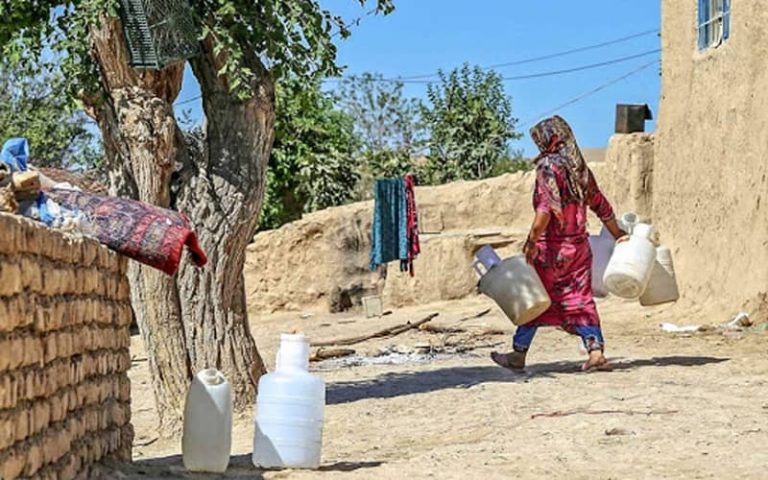
October 15 is the International Day of Rural Women, designed to draw attention to the plight of these marginalized women and help them get sustainable access to food to fight poverty, so we’re looking at rural women in Iran.
Here are some of the challenges faced by Iranian women, which are exacerbated in the case of rural women:
- early marriage
- education exclusion
- domestic violence
- limited access to sanitation, hygiene, and water
- little knowledge about their legal and social rights
Female Border Porters: A Look at Their Vile TreatmentThis sexist culture, mixed with poverty and all of the other problems that the Iranian people face, means that rural women are one of the most marginalized groups in Iran.
Iranian Rural Women’s Education
Most rural girls drop out of school before their 10th birthday, having just five years of education in rundown facilities. There are many reasons for this, including having a hard time physically getting to the school from their remote house, facing possible attacks from wild animals and harassment from strangers on the way. Another reason would be poverty and a lack of access to essential equipment. The Education Ministry’s advisor in women’s affairs, Farahnaz Mina’ipour, said it was impossible to have a high school in rural areas because so many teachers are needed, but this is a lie. It would be possible. Many other countries make it possible. They just don’t care and even try to blame families for not wanting their young daughters to travel long distances alone when they could be in danger.Iranian Rural Women Face Early Marriage and Pregnancies
Many girls – some as young as 10 – are forced to drop out of school to marry men much older than them, which leads to early and repeated childbirth. This process is psychically, emotionally, and mentally damaging to young girls, leading to an early death.Lack of Employment Opportunities for Iranian Rural Women
Because they were forced to drop out of education and have kids young, rural women have few job prospects and are essentially forced to work as slaves, doing various jobs in the village, alongside housework and childcare, without getting paid. The Women’s Committee of the National Council of Resistance of Iran (NCRI) wrote: “Under the rule of a misogynous regime where women are considered second rate citizens, one could conceive what happens to these most deprived women who do not have any considerable access to the press or social media. So, speaking of women’s rights, human rights, human development, environmental protection, etc. are just a meaningless luxury without moving to isolate and remove the clerical regime dominating Iran.”Iranian Women Have the Highest Suicide Rate in the Middle East
